
Best Edmonton Suburbs(Neighborhood)
Edmonton, Alberta’s vibrant capital, offers a dynamic urban experience, but just beyond its borders lie thriving suburban communities that beckon with promises of tranquility, space, and a different pace of life. For many, the allure of suburban living—combining easier access to nature, potentially more affordable housing, and tight-knit communities—is undeniable. As of May 2025, the real estate market in the Edmonton Metropolitan Region reflects this appeal, with continued interest in areas offering a blend of these desirable features.
Choosing the right suburb is a significant decision, hinging on individual priorities like family needs, commute times, budget, and lifestyle preferences. Whether you’re seeking excellent schools, abundant green spaces, convenient amenities, or a peaceful retreat, Edmonton’s surrounding areas offer a diverse palette of options. This guide explores some of the top-rated suburbs, drawing on current insights to help you find your ideal home base.
The Appeal of Suburban Living Near Edmonton
Balancing Urban Access with Quality of Life
Why are so many people drawn to the communities ringing Edmonton? The advantages often cited include:
- Sense of Community: Suburbs frequently foster a stronger sense of belonging, with local events, farmers’ markets, and active community leagues.
- Green Spaces and Recreation: Access to nature is often a key feature, with extensive trail systems, river valley parks, and recreational lakes nearby.
- Safety and Tranquility: Generally, suburban areas report lower crime rates compared to the urban core, offering a quieter and potentially safer environment.
- Affordability: While prices vary, many suburbs provide more affordable housing options, particularly for single-family homes, compared to central Edmonton neighborhoods. The median price for detached homes in some suburbs can be significantly lower than the city average.
- Convenience: Despite being outside the city limits, major highways like the Anthony Henday Drive, Queen Elizabeth II Highway (QEII), and Yellowhead Trail ensure that commutes to downtown Edmonton or other key areas remain manageable for most residents.
A Closer Look: Edmonton’s Premier Suburbs
Let’s dive into some of the most highly regarded suburbs surrounding Edmonton, grouped by their primary appeal:
Family-Friendly Hubs
St. Albert
Located northwest of Edmonton along the picturesque Sturgeon River, St. Albert (pop. ~70,000+) is often lauded as one of Canada’s best places to live. It’s known for its rich history, excellent schools, low crime rates, and superb healthcare facilities. Families appreciate the abundance of parks, recreational programs, and community events like the renowned St. Albert Farmers’ Market (Western Canada’s largest) and the International Children’s Festival. While housing can be priced higher than in some other suburbs, reflecting its desirability, it offers a high quality of life and strong community spirit. Commuting is facilitated by St. Albert Trail and the Anthony Henday Drive.
Sherwood Park
Situated immediately east of Edmonton in Strathcona County, Sherwood Park (pop. ~72,000+) is technically a large hamlet but functions like a self-sufficient city. It masterfully blends suburban tranquility with urban convenience, boasting extensive shopping centers, restaurants, recreational facilities (including Millennium Place), and a vast network of parks and trails. It’s considered highly desirable for families due to its reputable schools and community focus. Sherwood Park also benefits from a strong local economy, tied partly to Alberta’s Industrial Heartland. Proximity to Elk Island National Park is a bonus for nature lovers. Highway 16 provides a direct route into Edmonton.
Commuter Havens & Growing Communities
Leduc
Positioned south of Edmonton (pop. ~36,000+), Leduc’s strategic location near the Edmonton International Airport (YEG) and the QEII Highway makes it a prime spot for frequent travelers and those working in logistics or south Edmonton. It’s rapidly growing, offering a mix of housing options, often at more affordable price points than suburbs closer to the city core. Leduc boasts excellent recreational facilities, including the Leduc Recreation Centre, numerous parks, and golf courses. While offering a distinct community feel, it provides easy access to Edmonton’s amenities, typically a 20-30 minute drive downtown.
Beaumont
Southeast of Edmonton (pop. ~20,000+), Beaumont has evolved from a French-influenced agricultural town into a popular and charming bedroom community. It maintains a distinct small-town atmosphere with unique architecture and community events like the Beaumont Blues & Roots Festival. Residents enjoy good access to parks, schools, and local amenities. Its location offers reasonable commutes to south Edmonton, Nisku, and the airport. Beaumont is known for being family-friendly and relatively affordable, attracting those seeking a close-knit community vibe.
Affordable & Outdoor-Lifestyle Focused
Spruce Grove
West of Edmonton (pop. ~40,000+), Spruce Grove appeals strongly to those seeking an active, outdoor lifestyle at a more accessible price point. The city is interwoven with parks and extensive paved trail systems perfect for walking, biking, and enjoying nature. It offers a range of housing, including newer developments, often more affordable than in Edmonton or St. Albert. Spruce Grove provides all necessary amenities, including shopping, schools, and recreational facilities like the TransAlta Tri Leisure Centre (shared with Stony Plain). Commuting to Edmonton is straightforward via Highways 16 and 16A.
Fort Saskatchewan
Located northeast of Edmonton (pop. ~28,000+) along the North Saskatchewan River, Fort Saskatchewan offers a blend of industrial roots and growing residential appeal. It’s known for its beautiful river valley park system, including attractions like the Rotary Amphitheatre and the West River’s Edge Pavilion. It also gains unique charm from its flock of sheep that graze the parks in the summer (celebrated with an annual Sheep Leaving Parade). Housing is generally considered affordable. The city provides good amenities, schools, and recreational opportunities, including the Dow Centennial Centre. Commutes to northeast Edmonton and the Industrial Heartland are convenient, with access to Edmonton via Highway 15 and the Yellowhead Highway.
Comparative Glance: Top Edmonton Suburbs
Choosing the right suburb depends heavily on personal priorities. This table provides a quick comparison of the key suburbs discussed:
| Suburb | Approx. Population | Location Relative to Edmonton | Key Features | Typical Housing Price Range | Approx. Commute to Downtown |
|---|---|---|---|---|---|
| St. Albert | 70,000+ | Northwest | Historic charm, Sturgeon River valley, top schools, healthcare, farmers’ market, low crime | Moderate to High ($400k – $700k+) | 20-30 minutes |
| Sherwood Park | 72,000+ | East | Self-sufficient amenities, extensive parks/trails, strong schools, rec facilities, proximity to industrial jobs | Moderate ($400k – $600k+) | 20-30 minutes |
| Leduc | 36,000+ | South | Airport proximity, QEII access, growing community, Leduc Rec Centre, affordable housing options | Affordable to Moderate ($300k – $550k+) | 25-35 minutes |
| Beaumont | 20,000+ | Southeast | Small-town feel, unique architecture, community events, parks, family-friendly, affordability | Affordable to Moderate ($350k – $500k+) | 30-40 minutes |
| Spruce Grove | 40,000+ | West | Outdoor lifestyle focus, extensive trails, parks, affordability, good amenities, Tri Leisure Centre | Affordable to Moderate ($300k – $500k+) | 30-40 minutes |
| Fort Saskatchewan | 28,000+ | Northeast | River valley parks, sheep grazing program, affordability, Dow Centennial Centre, community events | Affordable ($300k – $500k+) | 30-40 minutes |
Note: Population figures are approximate. Housing price ranges are general estimates based on available data up to May 2025 for typical single-family homes and can vary widely. Commute times are estimates and depend on traffic conditions.
Visualizing Suburb Strengths
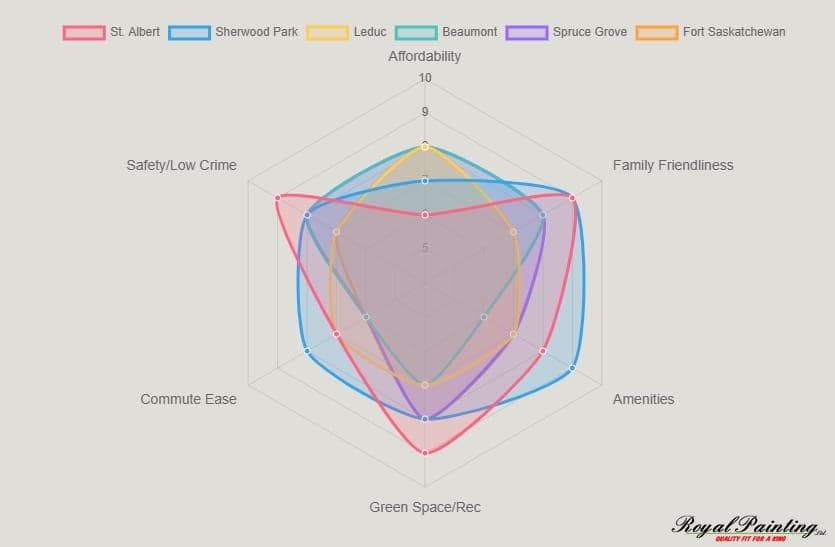
To help visualize how these top suburbs compare across different factors, consider the following radar chart. The scores (out of 10) are subjective estimations based on the characteristics commonly associated with each area, reflecting relative strengths rather than precise data points. A higher score indicates a stronger perceived performance in that category.
Key Considerations When Choosing Your Suburb
Making the final decision requires careful thought about your personal circumstances and priorities. Consider these factors:
- Commute Time & Transportation: Evaluate the distance and typical travel times to work, school, or frequently visited locations. Check public transit options if needed. Consider the impact of seasonal weather on commutes.
- Housing Budget & Style: Determine your budget and the type of housing you prefer (detached home, townhouse, condo). Research current market trends and property taxes in your shortlisted suburbs.
- School Quality: If you have children or plan to, investigate the reputation and performance of local schools and catchment areas.
- Amenities & Lifestyle: Assess the availability of shopping, dining, healthcare, recreational facilities, parks, and cultural activities that match your lifestyle.
- Community Vibe & Safety: Visit potential suburbs at different times to get a feel for the community atmosphere. Research crime statistics and talk to current residents if possible.
- Future Development: Consider any planned developments (new subdivisions, infrastructure projects, commercial centers) that might impact the area’s character or property values.
Frequently Asked Questions (FAQ)
Which Edmonton suburb is best for young families?
Suburbs like St. Albert and Sherwood Park are consistently ranked highly for families due to their excellent schools, numerous parks, recreational facilities, low crime rates, and strong community engagement. Spruce Grove and Beaumont are also popular family choices, often offering more affordable housing options alongside good amenities and a safe environment.
What are the most affordable suburbs near Edmonton?
Generally, suburbs further from the city center or those still undergoing significant development tend to be more affordable. Spruce Grove, Leduc, Fort Saskatchewan, and Beaumont often present more budget-friendly housing options compared to St. Albert or established areas of Sherwood Park. Smaller surrounding towns like Gibbons or Morinville might offer even lower costs but with fewer amenities and potentially longer commutes.
How are commute times from the suburbs to downtown Edmonton?
Commute times vary significantly depending on the suburb, time of day, and traffic conditions. From closer suburbs like St. Albert and Sherwood Park, expect roughly 20-30 minutes in typical traffic. From Leduc, Spruce Grove, Beaumont, and Fort Saskatchewan, commutes are generally in the 25-40 minute range. Proximity to major routes like Anthony Henday Drive, QEII, Yellowhead Trail, or Highway 16 greatly impacts travel time.
Are suburbs safer than living in Edmonton?
Based on available crime statistics, many of Edmonton’s surrounding suburbs generally report lower overall crime rates, particularly property crime rates, compared to the city average. St. Albert, for example, often highlights its low crime statistics. However, safety can vary within suburbs, and it’s always wise to research specific neighborhood crime data.